
My 3 Steps for Targeted Nutritional Support For Your Thyroid – Hyperthyroid | Hypothyroid!

Before we talk about nutrition, let’s understand what the thyroid is and how it works.
The thyroid gland is a small, butterfly shaped gland which is located at the base of the neck, just in front of the windpipe. They say that good things come in small packages and as far as the thyroid is concerned, that could not be more true!
What does the thyroid do?
The thyroid is about the size of a plum, cut in half and is classed as an endocrine gland which produce hormones that have important jobs such as regulating the body’s metabolic rate, controlling heart, muscle and digestive function, involved in developing the brain and maintaining bone health.
The thyroid makes two hormones that it secretes into the bloodstream. They are Thyroxine (known as T4) and triiodothyronine (known as T3). Both hormones are important in thyroid function but T3 is the active form with the most important jobs.
Who tells the thyroid to release hormones?
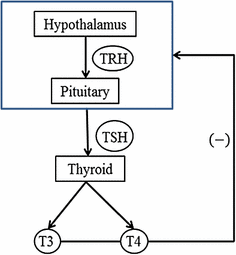
The signal comes from a small gland located at the bottom of our brain called the pituitary gland. The pituitary signals the thyroid by producing a hormone called thyroid stimulating hormone (TSH). TSH levels in your blood rise and fall depending on your body’s need for thyroid hormone.
There is a third messenger involved in this process – the hypothalamus. Not only does the pituitary respond to thyroid hormones in the blood, but so does the hypothalamus which is a gland, situated above the pituitary.
The hypothalamus releases its own hormone – thyrotrophin release hormone (TRH) which then stimulates the release of TSH in the pituitary which signals the thyroid gland.
This whole network of communication is known as the hypothalamic-pituitary-thyroid axis (HPT) and can adapt to the body’s metabolic changes and needs.
What could go wrong with the thyroid?
Issues can generally arise with the thyroid due to how much or how little thyroid hormone is being made. In a healthy functioning thyroid, there will be the right amount of hormone produced to keep your body’s metabolism running and in balance.
Several disorders can occur if your body produces too little thyroid hormone (hypothyroidism) or too much thyroid hormone (hyperthyroidism) resulting in your body using too much or too little energy.
Common disorders of the thyroid are Hasimotos thyroiditis, Grave’s Disease, goitre and thyroid nodules.
Typical symptoms of:
Hypothyroidism
Effectively your body is on go-slow because you are not making enough thyroid hormone for your body’s requirements. Typical symptoms include;
- weight gain / difficulty losing weight
- slower heart rate
- fatigue
- increased sensitivity to the cold
-
weakness
- dry hair / poor skin
- headaches
- anxiety / panic attacks
- depression
- hair loss
- muscle and joint pain
- low libido
- stronger, heavier periods
In addition, hypothyroidism may be accompanied by an enlarged thyroid gland, known as a goitre.
Hyperthyroidism
Quite the opposite, hyperthyroidism is your body speeding up because you are producing too much thyroid hormone. Typical symptoms include;
- nervousness
- irritability
- hyperactivity
- unexplained weight loss
- insomnia
- palpitations
- muscle weakness
- frequent bowel and bladder movements
- diarrhoea
- fatigue
- heat sensitivity
- increased sweating
- brittle hair / nails
What causes thyroid disease?
There are various different factors causing hyper- and hypothyroidism.
Hypothyroidism |
|
| Thyroiditis: | an inflammation of the thyroid gland which can lower the number of hormones produced. |
| Hashimoto’s Thyroiditis: | a genetic disorder caused by an immune system disorder |
| Iodine deficiency: | iodine plays a pivotal role in how the thyroid functions and produces thyroid hormones |
Hyperthyroidism |
|
| Grave’s Disease: | an autoimmune disorder where antibodies stimulate the thyroid to produce excessive amounts of thyroid hormones |
| Thyroiditis: | can also trigger the release of hormones stored in the thyroid gland causing hyperthyroidism short-term |
| Thyroid nodules: | small nodules can develop on the thyroid causing the thyroid to become overactive |
Still not sure how the thyroid works? click here
How is thyroid disease diagnosed?
Your GP will identify any symptoms of thyroid disorder and can carry out a basic test of your thyroid function. The result may show that your thyroid is working efficiently, but you still might frustratingly still have symptoms.
Why?
There are a variety of ways that the thyroid can fall so to get an understanding of why that might be, a full thyroid panel could be needed. A comprehensive test will include the your thyroid stimulating hormone (TSH), free T3 (FT3) and free T4 (FT4), as well as thyroid antibodies, for an in-depth picture of your thyroid health.
How does Nutritional Therapy Support the Thyroid?
If you have visited your GP and a thyroid disorder has been confirmed, your GP may put you on medication.
However, don’t discount the critical role that both nutrition and lifestyle can play in optimising thyroid function and thyroid treatment.
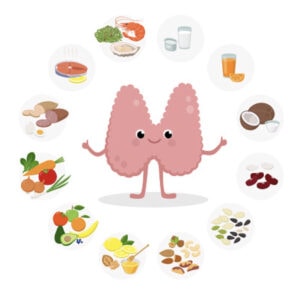
Thyroid hormones are built from protein (tyrosine) and iodine, so these dietary building blocks are crucial. Minerals, such as selenium, copper and zinc provide essential co-factors for enzymatic conversions of thyroid hormones.
Additional nutrients such vitamin E, B vitamins, C, D and iron also contribute to proper thyroid function. Exercise helps to stimulate thyroid gland secretion and can help improve cellular sensitivity to thyroid hormones.
Our adrenal function (our stress response) and our thyroid function are inextricably linked, a little like two wheels of a bicycle. So managing stress levels is important to support thyroid health.
My Approach
Step 1.
My detailed health questionnaire will give me an understanding of your health and lifestyle history. We will then meet for a consultation where we will discuss in more detail your symptoms that you have been experiencing.
We will discuss any lifestyle factors that may be contributing to your stress or anxiety levels as well as looking at your diet and eating patterns. The thyroid function directly depends on the adrenals and the pituitary so I will support these glands nutritionally.
Step 2.
If necessary, I may suggest functional testing of your thyroid gland to get a whole picture of what is happening and to understand if any other areas of the thyroid are out of sync. The body works as a whole I may require further testing to look at gut health, intolerances to gluten or toxic load.
Step 3.
Equipped with the results of the tests I will design an individual nutritional therapy programme for you including recipes and a supplement plan. You will learn the types of foods you should be eating and those you should be avoiding, to better support your body in resolving this condition.
[…] Thyroid – thyroid hormones are responsible for metabolism within every cell of the body. If it isn’t working efficiently, it can affect how easy or hard it is to lose weight. Learn more about thyroid HERE. […]